Saturday, April 7, 2007

Get Lost


If you ask me, there's nothing more sinister than a hedge maze. (Of course, I have a good reason for feeling that way--more on that later.) Even on the sunniest spring day, it's hard not to imagine someone or something waiting for you around one of the bends. (Which explains the role hedge mazes play in movies like The Shining and ghost stories, such as Mr. Humphries and His Inheritance.) But in honor of Otto, I'm offering a list of some of the world's most famous mazes (hedge or otherwise).

The Egyptian Labyrinth


Said to be more impressive than the pyramids, the Egyptian Labyrinth was an enormous temple complex surrounded by a wall. Hallways snaked through three thousand rooms and twelve courtyards--some above ground and some beneath it. As one witness remarked, the maze was so complex that "no stranger can find his way either into any court or out of it without a guide." Adding to the atmosphere were false exits and statues of "hideous monsters." (Above: The remains of the labyrinth as sketched in 1700.)


The Minotaur's Labyrinth


You're probably familiar with the myth. Each year (or every nine years, depending on which account you read), King Aegeus of Greece was forced to pay tribue to King Minos who ruled the island we now call Crete. The tribute was in the form of fourteen young men and women who would be fed to the fierce Minotaur that lived in a maze beneath King Minos's palace. Eventually, the hero Theseus slayed the Minotaur (though he'd probably have been the Minotaur's lunch if it hadn't been for King Minos's daughter, Ariadne) and put an end to the gruesome sacrifices.

Although a labyrinth has yet to be discovered on Crete, Minoans are known to have been quite fond of both mazes and bulls. Some have suggested that the vast Palace at Knossos, with its thirteen hundred rooms, may have inspired the legend.


Hampton Court Palace


Once home to King Henry VIII--and now home to quite a few ghosts (see post for 6/6/06), Hampton Court Palace boasts the best-known hedge maze in the world. Planted at the end of the 17th century for King William III of Orange, the maze's paths are more than half a mile long. A downloadable puzzle version can be found here.


Longleat


The world's longest hedge maze can be found at Longleat, the stately English home (turned theme park) of the Marquess of Bath. It was commissioned in 1975 by the extremely (and I do mean extremely) eccentric 7th Marquess.

Friday, April 6, 2007

Got a Question?


Cosimacat has started a forum here. Kirsten Miller has agreed to answer a few of your questions. She does eat, sleep, and occasionally work, however, so if your questions aren't answered immediately, don't be disturbed.

Otto Moreau (Alias)


Here are a few things I learned about Otto Moreau.

Born ca. 1985
Disappeared late June 2006

Real name unknown. (Not necessarily a matter of secrecy. Apparently his given name was somewhat embarrassing.)

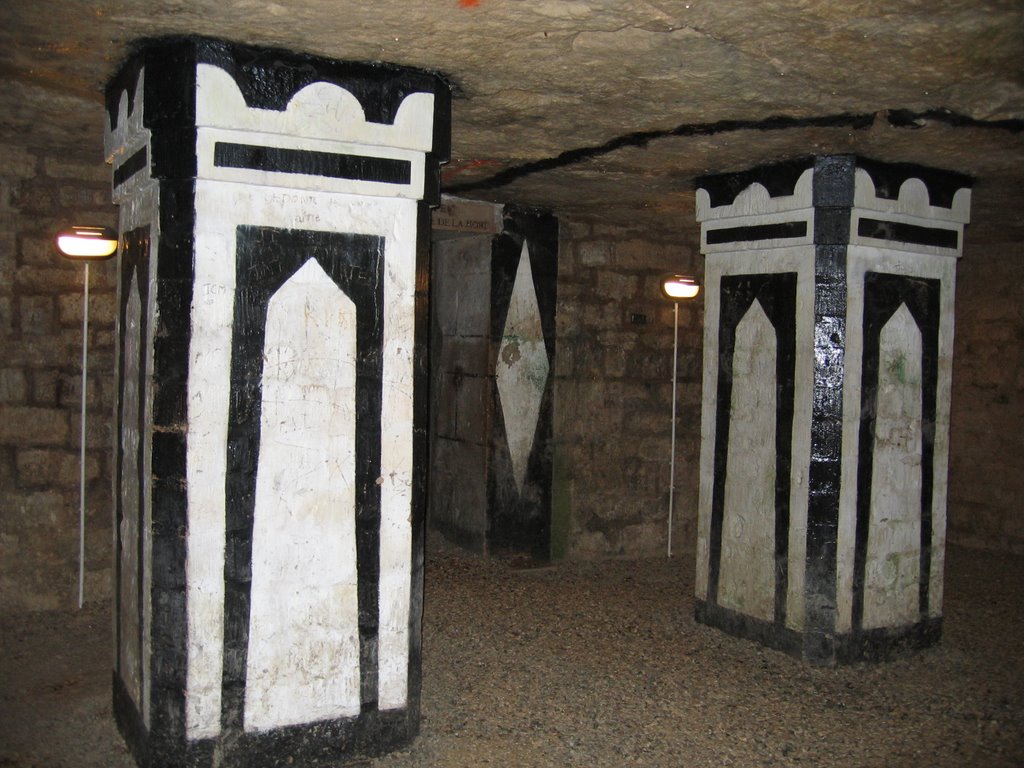
Otto claimed to have attended high school at the Lycee Montaigne near the Jardin du Luxembourg in Paris. The school sits atop one section of the catacombs. During World War II, the Luftwaffe (German Air Force) occupied the building and built what’s known as the Bunker Allemand (German Bunker) in the catacombs below. Otto’s explorations began at the age of twelve when his found an entrance to the bunker. The story cannot be checked since Otto’s real name remains unknown.

A maze enthusiast, Otto postponed college in order to start his own business designing holly and hedge labyrinths for the country estates of wealthy French businessmen and aristocrats. His last project was a three-dimensional maze inspired by the catacombs.

A fan of boudin noir—blood sausage (which I was forced to choke down in his honor).

Mother is American. Spoke fluent English.

Resembled a young Alain Delon. Not bad.

In 2001, he founded the Ariadne Society, a group devoted to the exploration and preservation of the catacombs.

In early 2006, Otto announced he had made a discovery, but refused to share full details. He began to spend more time in the catacombs, and by March was rarely seen on the surface. He soon took to communicating with his friends through cryptic notes hidden in crevasses throughout the tunnels. Some made sense—others were rambling and incoherent. Many may not have been found. The last note asked society members to gather at “la pinacotheque” (art gallery), but did not provide directions.

Thursday, April 5, 2007

The Chicago Coyote


It seems a coyote wandered into a Quiznos restaurant in downtown Chicago yesterday. The full story, which can be found on the Chicago Sun Times, is quite entertaining, but I was more amused by the two customers who refused to leave before they'd finished their chicken sandwiches.

Tuesday, April 3, 2007

New York's Secret Subway


Thirty-four years before the New York subway was first opened to the public, another underground railroad was secretly built beneath Manhattan. Today, most New Yorkers are unaware of its existence, but parts of Alfred Ely Beach's pneumatic subway may still lie under the streets, waiting to be rediscovered.

Alfred Ely Beach was an inventor, lawyer, and newspaperman whose offices at the New York Sun looked down on the streets of Lower Manhattan. In the 1860's, traffic in the city was worse--and far more dangerous--than it is today. Pedestrians who dared cross the crowded roads were often trampled by horses, and traffic jams regularly paralyzed the city. Add to this the fact that the garbage piled on the streets and sidewalks could reach knee-deep (horses contributed four hundred tons of manure a day), and you can see why a genius inventor might look for a solution below ground.

Unfortunately, at the time, New York was ruled by a corrupt politician named Boss Tweed. Nothing was built in New York unless the project lined the pockets of Tweed's cronies. So rather than pay "political blackmail," Beach decided to construct his subway in secret. He and his brother rented the basement of a clothing store on Broadway and started to dig. Every day, workers would bore through the earth, and each night, other men would furtively cart the dirt away.


In 1870, Beach opened his subway to unsuspecting reporters, politicians, and members of the public. Beneath the basement of a house on Warren Street, they found a lavish underground waiting room, complete with frescos, a fountain, flowers, a grand piano and chandeliers. Then they were allowed to ride--ten at a time--in a richly-upholstered car which was blown through a 312-foot tunnel by an enormous fan.

Beach's subway was a sensation for months, but he never received the city funds he needed to extend it. Ultimately, people stopped visiting, and by the 20th century, it was largely forgotten. When workers happened upon the tunnel in 1912, they had no idea what they'd found. Then they discovered Beach's tiny train, still sitting on the tracks. It was New York's first abandoned subway station.

Monday, April 2, 2007

The Dinner Party


Once lunch was over and the waiter had arrived with the check, Claire passed me list of the supplies I’d need to purchase for our expedition into the catacombs. The tall rubber boots and flashlight were self-explanatory. But the list also included four cans of confit, three types of cheese, two baguettes, and a bottle of cheap wine. I asked if we’d be having a picnic, which made Claire laugh.

“The food is to keep us out of trouble with the troglodytes,” she told me.

"Troglodytes?”

“People who live in the catacombs. It’s best to have something to trade with them in case we need help. Underground, a good baguette can save your life.”

“I’ll buy everything this afternoon,” I told her. “What time should we meet tonight?”

Claire shook her head. “Not tonight. We will go on Monday. The catacombs are full of teenage boys and tourists on the weekends, so there are more police in the tunnels. All serious explorers go during the week.”


I couldn’t stifle my sigh. Monday was still two long days away, and I’d already grown to loathe Sundays in France. With all the stores shuttered, and no English-speaking friends to amuse me, my homesickness grew deadly. Claire seemed to understand my predicament.

“There is a dinner party on Sunday night,” she said. “It’s in honor of my friend Otto. Maybe you would like to come?”

“I’d love to!” I hated to sound so eager. The French seldom showed such enthusiasm.

“Then you should meet me at nine at the McDonalds on the Place de la Republique.” She looked me over and grinned. “Wear something chic.”

At 9:15 on Sunday, I was waiting outside the garish McDonald’s, wondering if I had fallen victim to a cruel prank, when I heard Claire call to me from across the street.

“I’m sorry. I’ve made us late,” she said. “We must hurry.”

Her red dress floated in the wind as she guided me to nearby a metro (subway) entrance. The station had long been abandoned and a metal gate blocked the stairs. Claire scanned our surroundings, taking note of a woman with a dachshund and a man relieving himself against a wall, before pulling out a set of keys. She opened the gate, and we both hurried into the darkness.

“They closed the Saint-Martin station during the Second World War,” Claire told me. “Part of it is used as a homeless shelter, but this part is ours.”

“Ours?” I asked.

“The Mexicans are not the only subterranean society,” she informed me.

When Claire turned on a flashlight, I wondered if a war had taken place inside the station. Everything that wasn’t burned or broken was caked with black grime. Tiles had fallen from the arched passages, and razor-sharp shards littered the floor. Rats frolicked in tall piles of garbage and debris. I’d visited several of New York’s abandoned subway stations, but I’d seen nothing that compared to the Saint-Martin metro stop.

We heard a rumble in the distance, and the platform began to vibrate beneath my feet. Claire flicked the switch on her flashlight, and we stood perfectly still in the darkness. A train shot past us, the eyes of bored commuters staring blindly out its windows.

When the train vanished, we approached a door composed of several old subway signs nailed together. A mouthwatering aroma wafted past my nose. Claire knocked and the door opened at once. Clean, white subway tiles gleamed in the light of countless candles. Massive 1930's advertisements for liquor and laundry detergent lined walls of an unused metro track. Seated at a long, beautifully-set table were more than a dozen people in formal clothing. A man in a chef’s hat toiled over five camping stoves at the end of the platform while a waiter filled water glasses. A banner on the wall read, “Bon Voyage Otto.”

“Where's your friend going?” I whispered to Claire.

“Heaven if he’s lucky,” she said. “He was declared dead last week. He disappeared in the catacombs three months ago, not long after he discovered the new passage.”

Sunday, April 1, 2007

Top 100 April 1st Hoaxes of All Time


The Museum of Hoaxes has a very entertaining list of the top April Fool's hoaxes "as judged by notoriety, absurdity, and number of people duped." Highly entertaining.

Where We Left Off . . .

THE PERFORATING MEXICANS
(June 24, 2006)


I will soon be spending some time in Paris. While there, I intend to investigate (and hopefully join) a group known as the Perforating Mexicans. (Also known as the Mexican Perforation and La Mexicaine De Perforation.)

In 2004, French police were training in an uncharted section of the Paris Catacombs when they happened upon a secret room deep beneath the city. Unlike most chambers in the catacombs, which are filled only with dirt and ancient bones, this had been turned into a movie theater and restaurant, complete with electricity and a couscous maker.

It seems a group of enterprising Parisians had combined their love of subterranean spaces with their passion for the cinema and created a movie theater in a forbidden part of the catacombs. When the authorities finally arrived for a formal investigation, they found nothing left but a note that read, “Do not try to find us.”

No one has heard from The Perforating Mexicans since, but I have a hunch that they haven’t abandoned the catacombs altogether.

For more information, see the Wikipedia entry, which includes an interesting picture of the secret society at play.


LESSON NUMBER ONE
(August 12, 2006)


(Which I learned the hard way, as usual.) Finding a way into the catacombs that stretch beneath Paris is not difficult. With a bit of luck, a runaway monkey could find an entrance. Finding a way out is the problem.

Law abiding types can always take the official tour, which guides you past the past the bones of six million Parisians which are stacked in a tidy fashion in a small section of the subterranean tunnels. An ancient and ominous warning greets all visitors, (“Stop, this is the empire of death.”), but unless you try to leave with a thighbone in your bag, you’re unlikely to end up into too much trouble.

Those who would prefer to pay a less legal visit to the catacombs, however, have a wide variety of options. Climb down any number of manholes around Paris, and you may find yourself in a dark passage that’s more than a thousand years old. (The entrance to a theater built by the Perforating Mexicans, for instance, can be accessed through a drain not far from the Eiffel Tower.)

Once you’re inside, you may want to keep an eye out for the policemen who periodically patrol the catacombs, but odds are you’ll see no one. There are more than 180 miles of tunnels under Paris, and only a handful of people can find their way around them.

Which brings me back to the monkey. Among the many who’ve met their fate in the catacombs was an orangutan that escaped from the Paris zoo over 200 years ago. But perhaps the most famous victim of Paris’s “Shadow City” was Philibert Aspairt who disappeared in 1793. His body was discovered many years later, a few feet from an exit. In his hands was a set of keys that could have saved his life. He was later buried on the spot where he was found. For a picture of his tomb, click here.

So now perhaps you’ll understand how it came to be that I got lost on my very first trip inside the catacombs.

If you'd like a little more information on Paris's Shadow City, and you can't wait, click here. Otherwise, stick around.


THE INTESTINE OF THE LEVIATHAN
(September 5, 2006)
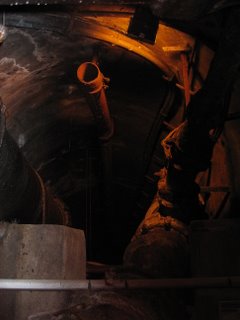


As I mentioned earlier, I first arrived in Paris in July. Verushka Kozolva had provided me with the telephone number of a young woman named Claire (for legal reasons, I can’t give her last name) who could serve as my guide to the catacombs. Her grandfather had been a member of the French Resistance during World War II, when both the Nazis and the Allies had used parts the underground tunnels to their advantage. In time, he had passed his knowledge of the catacombs along to his son (whom Verushka had befriended during year she and Kiki Strike lived in Paris) and his granddaughter.

Claire was vacationing in Romania during my first week in France. While I waited, I downloaded maps of the catacombs from some very impressive websites, but I didn’t trust them (or myself) enough to begin my explorations without an experienced guide. Instead, I tried to get in the mood by visiting other underground attractions around Paris. My first stop, of course, was the sewers.
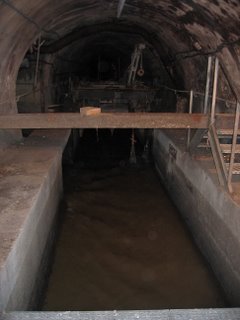


Anyone with a particularly sensitive nose should steer clear of the sewers. It’s not that they smell the way you’d expect them to smell. If I had to describe their unique bouquet, I’d say it was a mixture of pond water, mold, kitty litter, and garbage can on a hot summer day. But if you’re able to breath through your mouth, the sewers are well worth the trip.

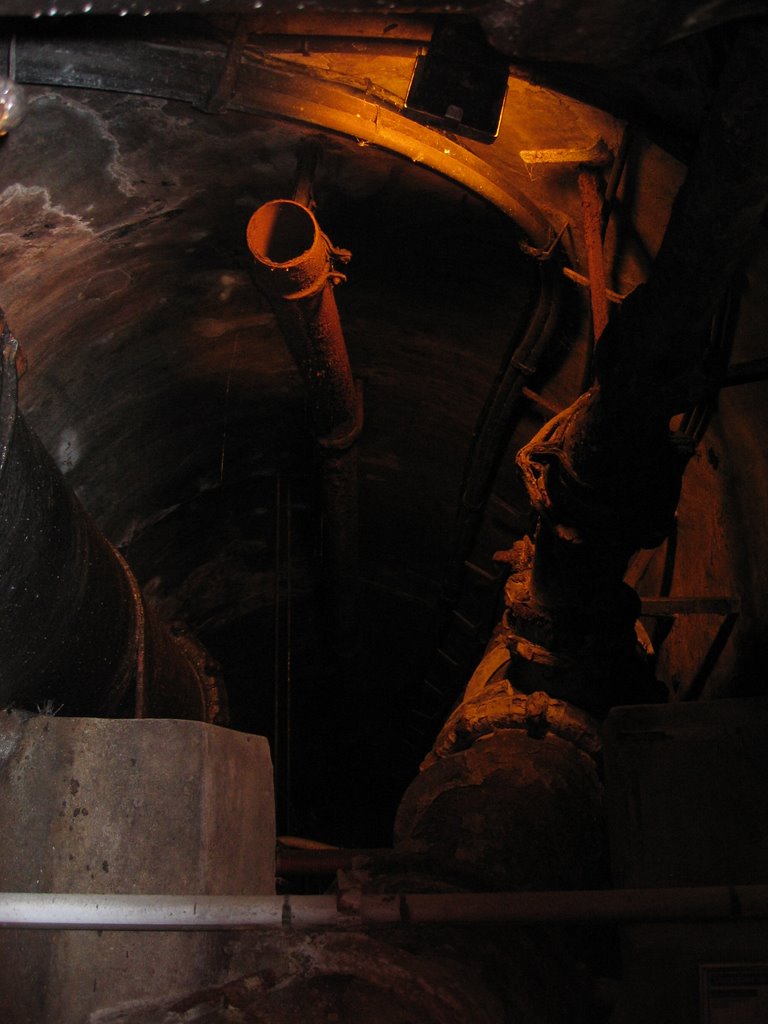
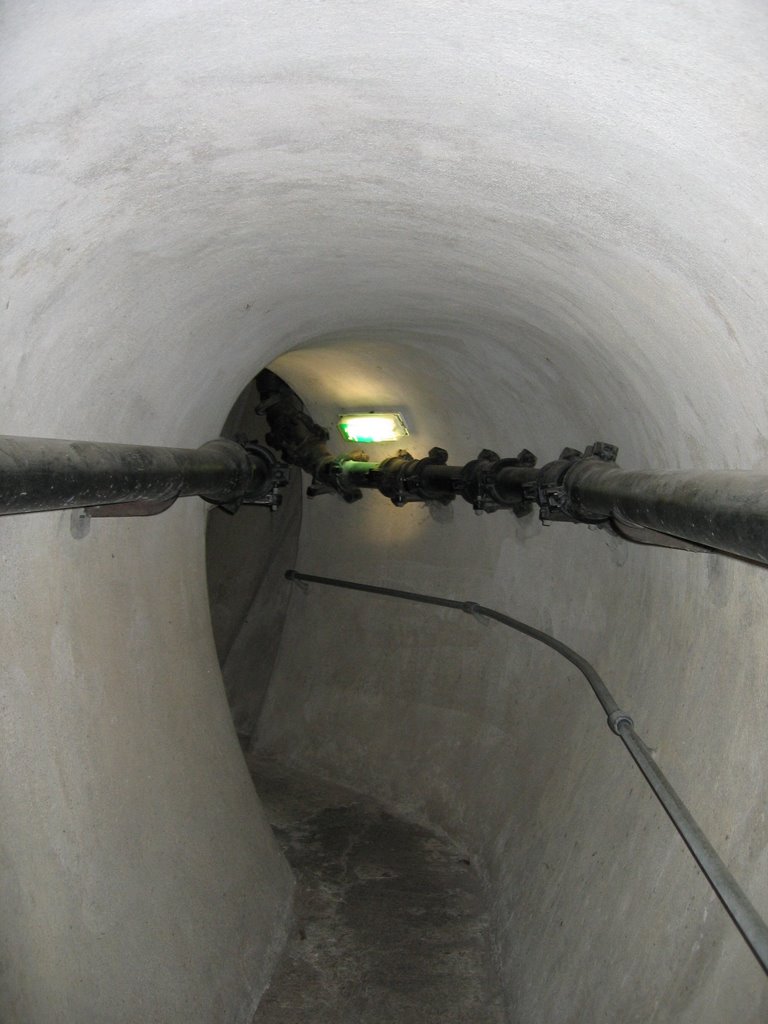
Dig deep beneath any street in Paris and you’ll find an arched tunnel made of brick or stone. In fact, the sewers follow course of the streets so precisely that they form a mirror image of the city above. (You’ll even find street signs to guide your way.) There are more than 1,300 miles of tunnels—some are enormous, more than 12 feet across, and others too narrow to enter. All are gloomy, dark, and dangerous. With a little rain, they become roaring rivers of filth, and toxic gasses are known to accumulate, killing the unprepared in seconds.

Despite the peril, there are many tales of those whose desperation or dimwittedness has led them to pry open one of the manholes that line the streets of Paris and drop into the darkness. Perhaps the most best know is that of Jean Valjean, hero of Victor Hugo’s novel, Les Miserables. (It was Hugo who famously referred to the sewers as “the intestine of the leviathan.")
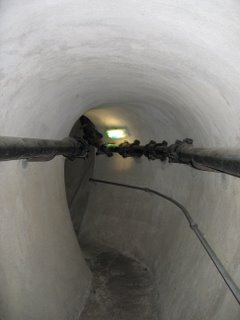


I, of course, chose to visit Le Musée des Égouts de Paris. It’s a strange museum built around a working part of the sewer system not far from the Eiffel Tower. You’ll see and smell everything you need to make the experience worthwhile, and you’ll learn to pity the people who lived in the days before the sewers were built. But perhaps the most interesting thing about the museum is that you're often on your own, away from guards and tourists. It would be easy to slip into the tunnels and make your way through underground Paris.


THE OSSUARY
(September 6, 2006)


In preparation for my journey into the forbidden passages of the Parisian catacombs, I also visited the tunnels that have been opened to the public. I expected a well-lit, heavily-guarded, tourist-filled environment—an underground Disney Land. I was wrong.


Two tips for visiting the catacombs. First, don’t go alone. (I did.) It’s dark. It’s quiet. And you don’t know who’s down there. Second, wear boots or sneakers. (I didn’t.) There’s water dripping (sometimes pouring) from the ceiling in most of the tunnels. The floor in many sections is one large puddle. But despite all this, if you follow my advice, you should have a fabulous time.

The highlight of the catacombs is, of course, the ossuary where human bones line the tunnels. But in order to see it, you must be prepared to walk quite a distance through dimly lit, stone-lined passages with ceilings that hover only a few inches above the top of your head. In many respects, this is the creepiest part of the journey. As the tunnels twist and turn, you can only imagine what might lie in front of you.
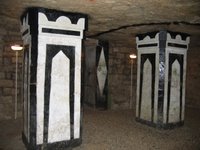


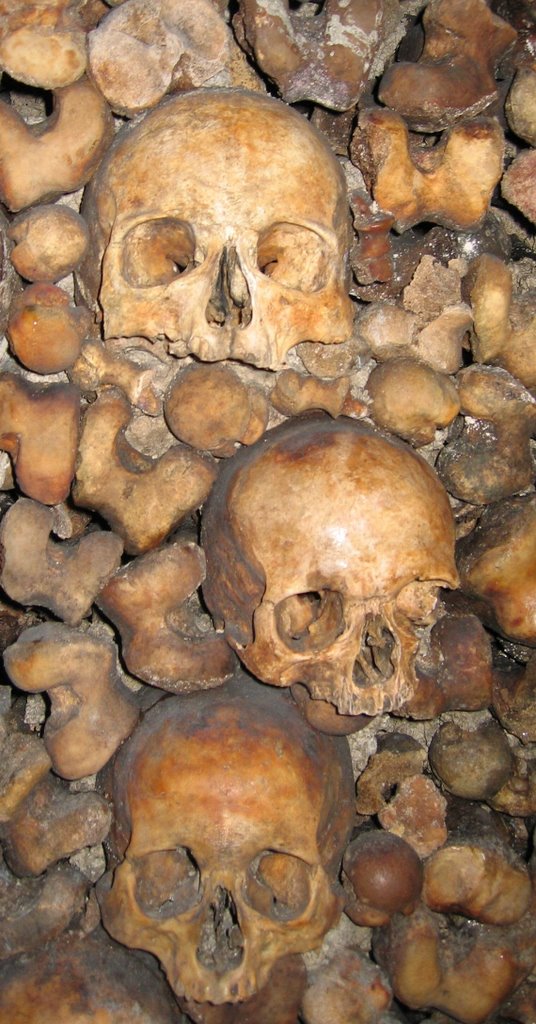
When at last you reach the entrance to the ossuary, and read the warning above the door (“Stop, this is the empire of death”), you may feel as if you’re ready for anything. You aren’t. There’s nothing that will prepare you for the sight of human bones stacked in neat piles that can reach more than six feet in height. These are the remains six million Parisians who were buried in the city’s cemeteries before the 19th century.


In the late 1700s, when Paris’s cemeteries had been crammed (literally) beyond capacity, the dead developed a nasty habit of tumbling into the cellars of nearby buildings. The stench from the graveyards was reported to be overpowering, and those who lived in the surrounding areas often fell prey to the “bad air.” That’s when the authorities decided to empty the cemeteries and deliver the remains to the ancient Roman quarry that stretched beneath the city. The men who carted the bones were only allowed to work at night, and it was years before the last of the dead made the trip.
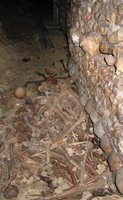


In the passages that are marked for sightseers, the bones of the dead are still artistically arranged, with skulls and femurs forming bizarre (often surprising) patterns. But if you pause to peer though the gates that block less traveled routes, you’ll see that many parts of the catacombs have not fared so well. Walls have crumbled, and the dead lay in chaotic heaps. A sharp eye will also find proof of the catacombs’ multiple layers. Look beyond the barriers, and you might find yourself staring down at a tunnel that weaves beneath your feet.

This was the first glimmer of what I might find in forbidden passages. But as fascinating as the ossuary was, I had no idea how little I’d seen.


I MEET MY GUIDE
(September 12, 2006)


My first meeting with the girl who was to guide me through the catacombs took place on the morning of July 15th. I met her at a café in the Latin Quarter, one of the oldest and bloodiest parts of the city. For hundreds of years, foreign students from the nearby universities and the native people of Paris staged gruesome and deadly battles in the warren of little streets just off the river. (Many over nothing more than the cost of wine.)

It was ten o’clock on a Saturday, and other than our waiter, it seemed as if we were the only people awake in town. Bastille Day celebrations had ended just hours earlier, and most Parisians were still sleeping off the effects. It was the perfect time to plan our expedition.

Though she’s only a year or two older than I am, Claire has been visiting the catacombs for more than a decade. But she only gives tours to those who come with a personal recommendation. Kiki Strike has seen the tunnels with Claire. So have several macho movie stars, one of whom didn’t like the idea of being guided by a girl. He took off on his own and was discovered twelve hours later, huddled in a corner crying softly to himself.

Claire said she had met members of the Perforating Mexicans while exploring the catacombs. She’d considered joining the club herself, until she found that their taste in movies didn’t suit her. She agreed to take me to see their underground cinema. (The one the police have yet to discover.) But there are far more interesting things in the catacombs, she assured me, than film clubs. Not only are there bunkers and crypts and rooms made entirely of chalk, but her grandfather had always sworn that there were passages under Paris that not even the most intrepid explorers had discovered—tunnels dug by the Nazis during the war. He had spent his entire life searching, and died before he could find them.

Saturday, March 31, 2007

Are You Ready?


The French Adventure begins again on Monday.

The Living Goddess


Throughout Nepal, both Hindus and Buddhists revere the Kumari Devi. These are young girls believed to be the incarnation of the goddess known as Taleju. The most famous of the Kumari is the Royal Kumari (see above) who resides in the capital city of Kathmandu. Many Nepalese believe that the girl is a source of supreme power, and even the king of Nepal must bow before her.

Each Kumari is chosen through an elaborate process. First, she must come from the tiny Shakya caste of silver and goldsmiths. She must also meet a long list of thirty-two physical criteria, including very black eyes and hair, unblemished skin, an appealing voice, and dainty feet. Then she is truly put to the test. The girl (who is often as young as four years old) is placed in a room with the severed heads of 108 goats and buffalo. Men in demon masks dance menacingly around her. Only a girl who shows no fear is eligible to house the goddess Taleju.

Once a girl is chosen, her life will change completely. Until she reaches puberty, her feet will never touch the ground. She will not attend school and can only enjoy the company of a few carefully chosen playmates. Crowds will wait outside her palace, hoping for a brief glimpse that will bring them good luck. The sick (particularly those suffering from blood disorders) will flock to her, bringing gifts and offerings in exchange for her blessing.

Then one day, puberty arrives and the girl returns to being a mortal. A new Kumari is anointed and the old one is banished from the palace and sent home to her parents. She's uneducated, knows no skills, and may never marry (since most Nepalese consider it bad luck to marry a former Kumari). It's a high price to pay for a few years spent as a living goddess.

Below: The Kumari Ghar, the Royal Kumari's palace in Kathmandu.


Blah, Blah, Blah . . . Look At That Bunny!


That was my reaction when I was flipping through a slide show on Newsweek's website devoted to "monster" animals. Big frogs, big snakes, big dogs. (One somewhat interesting cat.) Dull, dull, dull. And then I found Herman. He's more than three feet long and weighs upwards of 22 pounds.

Though Herman lives in Berlin with his owner, Hans Wanger, he calls to mind another giant rabbit that was terrorizing Northern England last year. Known as the were-rabbit (after the giant Wallace and Gromit character), the monstrous beast ripped up gardens for months, leaving huge bite marks in tender turnips and footprints as big as a deer's. The villagers hired two trained marksman to do away with the were-rabbit, but it disappeared without a trace sometime last summer. Let's hope it moved to a town that's a little less precious about its gardens.

Friday, March 30, 2007

Scandal


It has come to my attention that an unnamed institution has banned this blog. Apparently, the source of the controversy is the silhouette of a trucker. (See below.) While it is certainly in questionable taste, (hey—nobody’s taste is perfect all the time), you’ve got to wonder what planet someone lives on if she doesn’t see a hundred worse things before breakfast. The post would qualify for a G rating.

In fact, I challenge anyone to search this blog’s 100+ posts and find one foul word, one questionable link, or one reference to anything more “scandalous” than a flying humanoid. (Sorry if I’ve disappointed anyone.)

There’s a good reason there’s nothing of that sort to be found here. I have no issues with it personally—it’s just boring. There’s too much of that stuff on every other Internet site, and the last thing I’d want is a blog that’s like all the others.

This blog is devoted to all the amazing things people overlook everyday—not the stuff they could uncover with a simple Google search.

So what do you guys think? I originally considered taking the post down because it affects one of my favorite readers, but I think it’s better to open up the topic for discussion. I'm leaving the choice up to you guys.

Wednesday, March 28, 2007

Gotcha!


In 2004, a simple science experiment conducted by two fourteen-year-old Kiwi schoolgirls exposed false advertising claims made by the second largest food and drug company in the world. Yesterday, New Zealand courts fined that company more than $200,000 for fifteen breaches of its Fair Trading Act.

Made by GlaxoSmithKline, Ribena is a well-known juice drink outside of the US. One reason for its popularity? It has long claimed to be filled with wholesome, healthy vitamin C. In fact, advertisements for the product claimed the blackcurrants in Ribena syrup have "four times the vitamin C of oranges."

That was before Jenny Suo and Anna Devathasan decided to enter the Manukau Institute of Technology science fair. They expected their experiment--measuring the vitamin C content in a variety of juices--to be completely straightforward. They certainly didn't expect any surprises. As it turned out, they found that all the products they tested contained the advertised levels of the vitamin--except one. Multiple tests showed healthy, wholesome Ribena had ZERO vitamin C.

Since then, GlaxoSmithKline has admitted misleading the public. Odds are, they wouldn't have stopped if it hadn't been for two fourteen-year-old chemists.


What is This?


A deadly species of caterpillar?

The work of America's foremost gum sculptor?

Something too disgusting to discuss on this blog?

The latest in robot technology?

A delicacy found only in the mountains of China?


The answer . . . It's a caterpillar (surprise), but it's the inspiration for the latest advancements in robot technology. Scientists are busily working to create new soft-bodied robots that may look much like the creature shown above. They may even be built out of new materials similar to spider silk--which are completely biodegradable. The advantage is that these new robots will be able to go places (like ailing colons) that other robots may find difficult to reach. I'm all for progress, but the thought gives me the willies.

Monday, March 26, 2007

A Mummy's Hand Would Look Nice on Your Mantel


New York is truly a shopper's paradise. Not only is Dracula's Castle for sale here (see the post for January 10th), yesterday at an auction held at the I.M. Chait Gallery in Manhattan, New Yorkers were given the chance to purchase a mummy's hand, warthog heads, a fossilized penguin, meteorites, and the skull of a 67 million-year-old Tyrannosaurus bataar. (Which was advertised as "perfect for a New York City apartment.)

The dinosaur skull sold for $276,000, while the mummy's hand went for a mere $4500. (And it does, indeed, look nice on my mantel.) You can read more about the items that were up for auction in the New York Times and the New York Sun.

Below: The skull that will soon decorate some lucky New Yorker's apartment.


Why Not Turn the Tables?


I'm sure you've all seen a truck or two sporting "lady silhouette" mudflaps. And I bet you've also noticed that they're rarely driven by the sort of men you'd come across on the pages of GQ. So I propose giving these gentlemen a taste of their own medicine. You can now purchase stickers for the mudflaps on your own (or your parents') automobile that feature the silhouette of a rather portly trucker. I'm sure they'll get the joke, right?

Saturday, March 24, 2007

Your Own (Very) Secret Room


Ever wanted your own secret room, hidden passageway, or dungeon? These days, you don't need to purchase a castle to make that dream come true. Dozens of companies now specialize in creating fireplaces that rotate with the twist of a candlestick, staircases that rise to reveal hidden chambers, or library shelves that spin around when a certain book is removed. There was even a story (with some cool photos) in the New York Times last year about the growing popularity of these features. So if you're thinking of building a new home, you might want to investigate one of the sites that specialize in creating secret rooms to fit your every need.

While we're on the subject, I recommend checking out the legend of the secret room in Scotland's haunted Glamis Castle, which is said to be inhabited by either a hideously deformed aristocrat or a monster.


Thank Heaven


Images of "wise children" are everywhere today, and girls appear to be the most popular subjects. It's a world-wide phenomenon, which I find quite intriguing. Top, the work of American painter Mark Ryden. Middle, Japanese artist Yoshitomo Nara. Bottom, German photographer Loretta Lux.

Wednesday, March 21, 2007

The Crystal Cave of the Giants


Continuing with the Mexico theme . . . I recently came across some impressive photos of the Crystal Cave of the Giants inside the Naica Mine just south of Chihuahua City, Mexico. The "cave," which is more than 1200 feet below the surface, was accidentally discovered in 2000 by two brothers, Juan and Pedro Sanchez, who were drilling a new tunnel inside the mine. Imagine their surprise when their machinery uncovered a vast subterranean chamber filled with the largest crystals on Earth.

Later explorations determined that there are actually two chambers inside the Crystal Cave of the Giants. One is as big as a two-bedroom apartment--the other larger than a cathedral. Both feature enormous Selenite crystals, (named for the moon goddess Selene), which often reach more than twenty feet in length. Unfortunately, most sightseers can only endure a few minutes of ogling. The two chambers can reach more than 150 degrees and have been known to "bake" those who've become stranded inside them.

For Your Consideration: Flying Humanoids


It's hard to believe I've been blogging for an entire year, and I haven't written a single post on the subject of UFOs. Alien visitations rank fairly high on my list of obsessions--somewhere between giant squid and Japanese variety shows. So to make up for my oversight (and the extra day without a post) I'm presenting you with what I think is one of the strangest videos I've ever seen.

Mexico (as those of you who live there must know) seems to be a major destination for extraterrestrials. Sightings of flying saucers are unusually common down south, and Mexican UFO clubs are responsible for some of the best photographic "evidence" of their existence. But this video (and I've seen others like it) is different from what you're probably expecting.

Take a look. I'm curious to know what you think.


Tuesday, March 13, 2007

Dear Readers


I must take a short break from blogging in order to tend to some pressing business. (If you keep up with the news, you may know what I'm talking about.) I'll return no later than next Tuesday, March 20th with a continuation of my French adventure. (As well as the usual bizarre posts.)

Wish me luck.

Ananka

Saturday, March 10, 2007

The Strange Case of the Baby Dragon


In 2004, an Englishman named Allistair Mitchell made a stunning announcement to the press. He said he'd been asked by a friend to investigate an unusual object that the man had discovered in a garage in Oxfordshire. The object, preserved in large glass jar, appeared to be a baby dragon.

Mitchell claimed that a metal tin found near the dragon contained German paperwork dating from the 1890's. According to the documents, the creature had been offered to the British Natural History Museum but was rejected as a fake by the museum's experts. Mitchell suggested that German scientists might have created the dragon in an effort to dupe their English counterparts. This time, the usually skeptical Natural History Museum was intrigued and offered to examine the specimen it had rejected more than a hundred years earlier.

As it turns out, the unusual beast was a hoax. But the Germans weren't to blame. Allistair Mitchell had gone to great lengths to pull the wool over everyone's eyes. He had commissioned a well-known special effects company to sculpt the creature and had its glass jar handmade on the Isle of Wight. His motivation? He needed a publisher for a book he was writing. And I'm pleased to report that his mission was a success.

On a related note, in May of this year, the American Museum of Natural History in New York will be featuring an exhibit that "tracks the origins of legendary creatures including dragons, unicorns, mermaids, and sea serpents." I can hardly wait!

Friday, March 9, 2007

Because Everybody Loves Monkeys


A reader sent me a link to this video. Enjoy.

The Irregulars Salute Katie Ruiz


When a gang of armed men burst into Katie Ruiz's home this week, the 12-year-old New Yorker knew just what to do. As the vicious thieves ransacked her house and terrorized her family, she managed to stay calm and think quickly.

Katie told police that she had been doing her math homework when she saw a man with a gun run past her bedroom door. According to Newsday, the men had followed her mother home from work and forced her at gunpoint to let them inside. Katie grabbed her new cell phone and ducked into a closet. She dialed 911, and within minutes the police were outside the building. All four thieves were captured as they tried to escape. They've since been charged with a long list of crimes.

Katie Ruiz, you're invited to join the Irregulars!

For the whole harrowing story, click here.

For Your Amusement


(Above) The US Postal Service has created a line of R2D2 mailboxes to mark the 30th anniversary of Star Wars. (Unfortunately their website doesn't appear to be up yet.)

(Below) A chandelier made mostly from gummy bears. Cool, but won't they melt?

Thursday, March 8, 2007

Bullet-Proof and Fashionable


These days, you no longer need a bulky black vest to be bullet-proof. You can now purchase fashionable, light-weight suits, raincoats, and jackets made from high-tech fabrics that are designed to protect wearers from bullets, knives, and needles. You can even buy bullet-proof t-shirts and underwear.

Perhaps the most famous "bullet-proof tailor" is Miguel Caballero, a Columbian fashion designer who has crafted suits for the presidents of several South American countries. He enjoys testing his wares, and claims to have shot all eighty of his employees at one time or another. (They're all still alive, apparently.)

Unfortunately, Mr. Caballero doesn't seem to make any women's clothing. Such a shame. Check out his manly styles here.

Tuesday, March 6, 2007

The FeeJee Mermaid


A hundred and fifty years ago, Barnum's American Museum was hottest ticket in New York. Owned by a flamboyant man by the name of P.T. Barnum, it housed an astounding collection of curiosities, including a bearded lady, the conjoined twins Chang and Eng, and a twenty-five inch tall man who called himself General Tom Thumb. But perhaps the museum's most infamous and controversial attraction was the FeeJee Mermaid.

In 1842, a mysterious British doctor named J. Griffin arrived in New York with what he claimed was an amazing zoological discovery--a mermaid captured in the South Pacific. The crowds who flocked to see the creature, expecting a lovely corpse, were shocked to discover a hideous animal with a monkey-like torso and a fish's tail.

Despite the creature's unsightly appearance, the FeeJee Mermaid was an instant sensation, and attendance at Barnum's museum tripled during the month it was exhibited. Unfortunately for those who laid down their hard-earned cash to see the mermaid, it was all a just a clever hoax. There was no such person as Dr. J. Griffin, and the mermaid was merely an unusual piece of taxidermy.

Several months before “Dr. J. Griffin” arrived in New York, P.T. Barnum had leased the creature from another showman. By that time it had already traveled the globe. Many now believe it originated in Japan, where fishermen were known to craft fake mermaids by attaching the upper half of a monkey to the bottom half of a fish. A sailor originally purchased the mermaid and planned to exhibit it in London. Unfortunately, it was debunked by experts before he could make his fortune.

Barnum, of course, was smarter. He was well aware that the mermaid was a fake, but thanks to his ingenious publicity campaign, he made a mint long before the truth came out.

No one knows what happened to the Feejee Mermaid. It disappeared sometime after 1859 and may have been destroyed when Barnum's American Museum burned down in the 1860's. However, Harvard's Peabody Museum of Archaeology and Ethnology has an excellent example of a FeeJee Mermaid in storage, and some have even suggested that it may be the original. (See the photo below.)

Explore a wonderful virtual recreation of Barnum's American Museum here.

Potty Talk


The geniuses at New York Magazine have compiled a list of the most amusingly named port-a-potty companies around the country. Here are the top 20.

20. Happy Can Portable Toilets, Atlanta
19. Drop Zone Portable Service Inc., Frankfort, Ill.
18. Blackmas Best Seat In The House Inc., Bradley, Ill.
17. Plop Jon Inc., Port Saint Lucie, Fla.
16. A.S.A.P. Port-A-Pots Inc., Hampstead, Md.
15. Ameri-Can Engineering, Argos, Ind.
14. Bobby's Pottys, Joppa, Md.
13. Johnny On The Spot Inc., Old Bridge, N.J.
12. LepreCAN Portable Restrooms, Chicago
11. Loader-Up, Inc., Sarasota, Fla.
10. Mister Bob's Portable Toilets, Vero Beach, Fla.
9. Royal Throne, Washington, D.C.
8. Tanks Alot, Tomball, Tex.
7. Tee Pee Inc, Roseville, Mich.
6. Wizards of Ooze Ltd., Anacortes, Wash.
5. Oui Oui Enterprises Ltd., Chicago
4. Gotta Go Potties, Tobyhanna, Pa.
3. UrinBiz.com, Chicago
2. Willy Make It?, Oregon City, Oreg.
1. Doodie Calls, New Orleans

Can you believe someone got paid to put that list together? I want his job!